
Employee Benefits
Menopause at work: why proactive support matters more than ever
As organisations mark World Menopause Awareness Day on 18 October, it's worth asking a simple question: are employees receiving support early enough?


The conversation around menopause in the workplace has come a long way, and recent government guidance is encouraging employers with 250+ employees to outline the steps they’re taking to support employees experiencing menopause. 1
But effective support isn’t about policies, reporting or ticking boxes.
It’s about creating a workplace where people feel comfortable accessing support before symptoms begin affecting their wellbeing, confidence or performance.
The challenge of silent struggle
Menopause can affect people in different ways. Fatigue, poor sleep, anxiety, brain fog and reduced concentration can all impact day-to-day life and work.
Yet many employees continue to manage these challenges quietly, unsure what support is available or hesitant to raise the issue. As a result, employers often become aware of a problem only once it has started to affect performance, attendance or engagement.
The consequences can be significant. A 2023 CIPD survey found that 17% of women experiencing menopause symptoms had considered leaving work due to a lack of support, while 6% had already left a job for that reason.2
For employers, this matters. Menopause often affects employees at the peak of their careers, when their experience, expertise and leadership are most valuable to an organisation. When support isn’t available, businesses risk losing talented and experienced people who still have much to contribute.
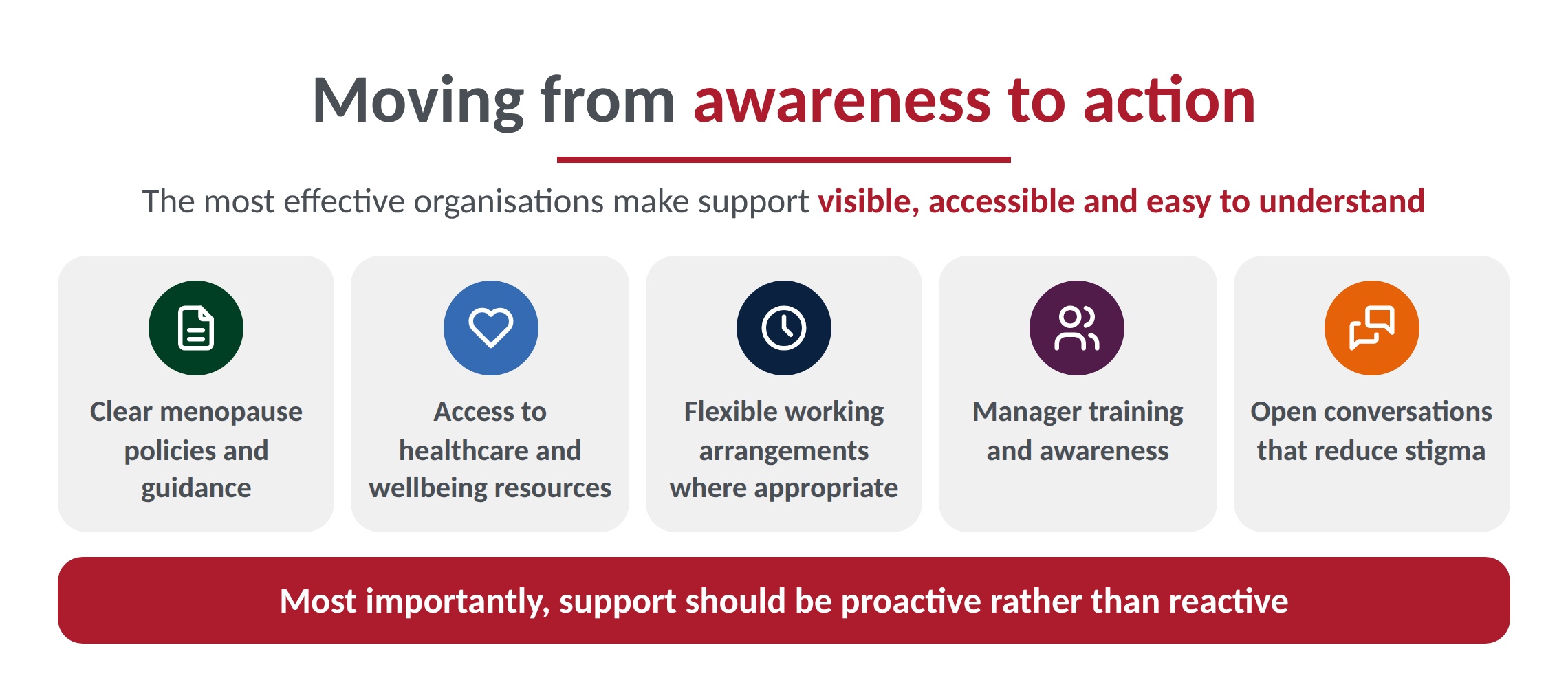
Moving from awareness to action
The most effective organisations don’t wait for someone to struggle before offering support.
They make support visible, accessible and easy to understand.
That might include:
- Clear menopause policies and guidance
- Access to healthcare and wellbeing resources
- Flexible working arrangements where appropriate
- Manager training and awareness
- Open conversations that reduce stigma
Most importantly, support should be proactive rather than reactive.
The role of managers
Managers don’t need to be menopause experts. They do need the confidence to listen, have supportive conversations and signpost employees to the help available.
Often, a simple check-in, a degree of flexibility or an open conversation can make all the difference.
Looking beyond compliance
The latest government guidance reflects the growing recognition that menopause support matters in the workplace.3
However, the organisations that will see the greatest impact are those that go beyond compliance and focus on creating genuinely supportive cultures.
Because menopause support isn’t just about helping people through a life stage. It’s about retaining experience, supporting wellbeing and helping employees thrive throughout their careers.
Ultimately, success shouldn’t be measured by how well an organisation responds when someone is already struggling.
It should be measured by how often people feel able to access support before they get to that point.
Sources: