
Monthly Market Commentary – October 2026
The Monthly Market Commentary (MMC) is an update on the world in which we invest.
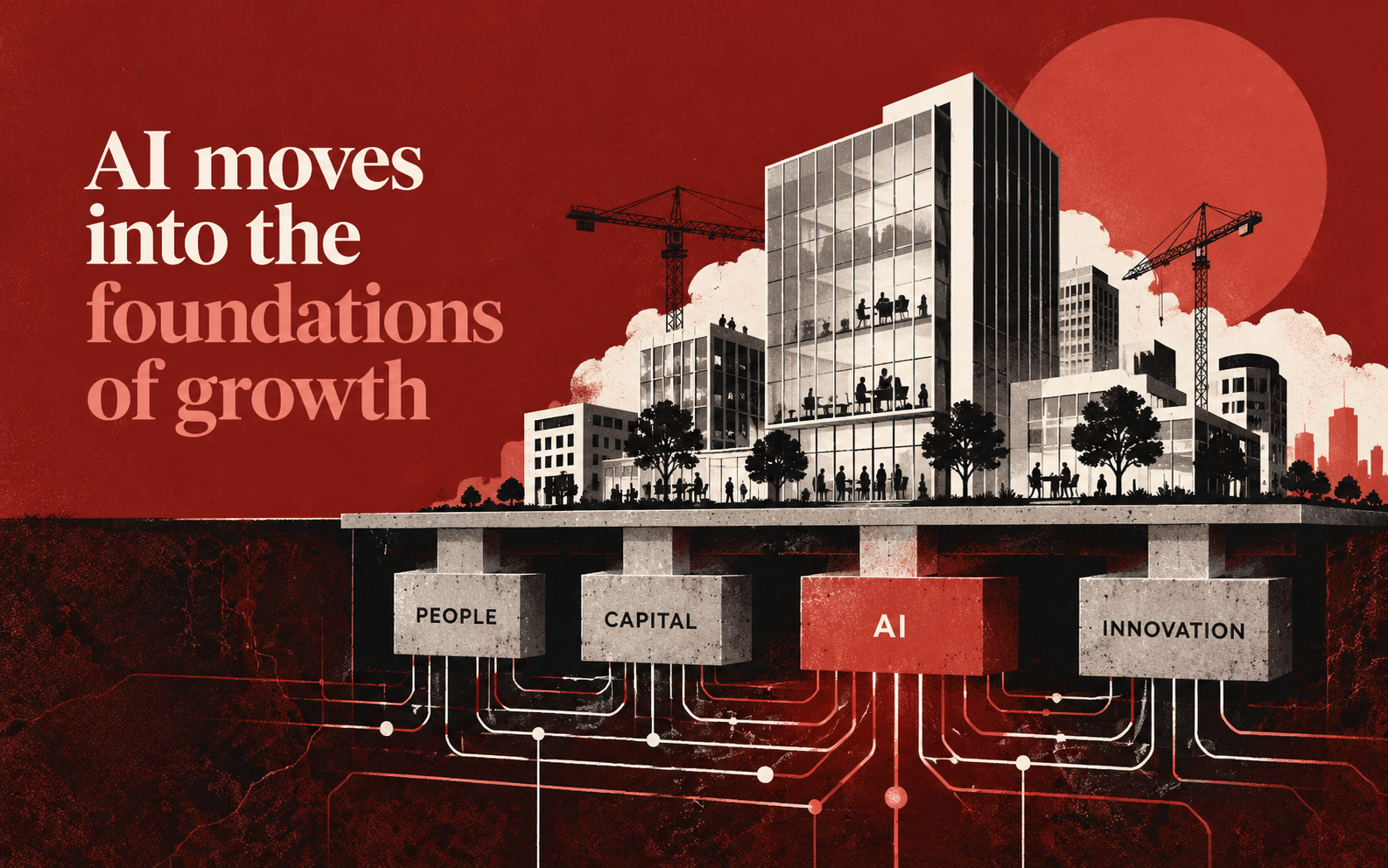

Welcome to October’s market commentary. In Lewis Carroll’s world, things were rarely as they seemed. September’s markets felt much the same. Interest rates went up, bond yields climbed and oil prices threatened to cause mischief, yet equities largely carried on regardless. “Curiouser and curiouser”, as Alice might have observed. This month, we step through the looking glass to examine why markets remain focused on earnings, how AI is reshaping investment opportunities across the globe, and why resilience rather than efficiency is becoming one of the defining economic themes of our time.
What mattered most this month:
- Markets continued to prioritise earnings over macroeconomic worries.
- AI is becoming infrastructure, not speculation.
- The winners are those increasingly supplying the AI ecosystem.
- Bond markets remain challenged by a higher-for-longer rates world.
Global markets summary
Artificial intelligence has created a strange habit. We now instinctively look twice at anything impressive and ask whether it’s genuine. September’s markets inspired much the same reaction. Faced with rising bond yields, higher energy prices and renewed geopolitical uncertainty, investors could be forgiven for wondering whether the resilience of equities was real. Increasingly, the answer appears to be yes.
Over September, rates kept rising, oil kept everyone guessing, and equities largely shrugged and carried on. It was a reminder that markets can endure a great deal of uncertainty when earnings continue to deliver. The story of 2026 has not changed: strong corporate profits have mattered more than central banks.
Against that backdrop, there was no shortage of potential headwinds. Oil prices moved higher as tensions in the Middle East remained unresolved. Government bond yields rose sharply, reflecting expectations that interest rates may stay elevated for longer. Normally, such conditions would present a more significant challenge for equity markets.
Yet equities largely refused to panic.
The MSCI World Index rose 0.9% in sterling terms during September, while the S&P 500 gained 1.7%. Japan was again among the strongest performers, returning 3.6%, with emerging markets and Asia ex Japan also advancing. The UK lagged, falling 2.0%, while bond markets struggled as higher yields pushed both government and corporate bond indices into negative territory.
The divergence is telling. Markets most closely linked to technology spending, AI infrastructure and digital innovation generally continued to outperform, while regions with less exposure to these themes lagged. Investors appear increasingly willing to look through short-term economic noise because they believe the long-term earnings opportunity remains intact.
Twelve months ago, many investors viewed artificial intelligence as an exciting possibility. Today, markets are increasingly treating it as an economic reality. Companies are no longer simply talking about AI. They are investing heavily in it, generating revenues from it and beginning to report tangible productivity gains as a result.
Perhaps that’s the most important lesson from September. Markets are not ignoring risks. Rather, they’re concluding that corporate profitability remains strong enough to absorb them. For now, at least, artificial intelligence has moved beyond being a source of excitement. It’s becoming part of the foundations on which companies, economies and increasingly markets are being built.
United Kingdom
September proved an eventful month for UK markets. The biggest story was the Labour Party Conference, where new Prime Minister Andy Burnham set out his vision for Britain. Key announcements included a new Help to Buy scheme to support first-time buyers, plans to build record numbers of council homes and the establishment of GB Grid to accelerate the UK’s energy transition. Perhaps most significant for investors was the proposed reform of the state pension Triple Lock from 2030. This would remove the earnings growth element, though the Government’s indication that it would be replaced by a “new earnings link” leaves the policy’s true impact uncertain and with it the question of how a new National Care Service estimated to cost £18 billion is to be funded.
The UK’s fiscal position remained under the spotlight throughout the month. Gilt markets were at times nervy and 30-year gilt yields briefly touched 5.9%, the highest since 1998, as the global bond sell-off hit countries with larger deficits hardest. Public borrowing in August came in at £18.3 billion (well above the Office for Budget Responsibility’s forecast of £14.8 billon), while questions swirled about the Chancellor’s budgetary headroom, which may have shrunk from £24 billion to as little as £5 billion. The October Budget remains the key near-term event for UK markets.
Against this backdrop, the Bank of England held interest rates at 3.75%, as expected, with its Monetary Policy Committee voting 6-3 in favour of no change. More market-moving was the Bank’s decision to suspend gilt sales until April 2027. This provided meaningful relief to the gilt market, with 10-year yields falling and UK equities rallying on the day. Inflation ticked up to 3.1% in August, driven almost entirely by motor fuel prices rising 23%.
Elsewhere, data was mixed. GDP numbers beat expectations, while retail sales surprised to the upside in August. However, the labour market continued to soften, with vacancies at their lowest since 2014 and payrolled employment falling. Consumer confidence also improved slightly, coming in at -13 against a consensus of -16.
On valuations, UK smaller companies remain attractively priced relative to history, with merger and acquisitions activity elevated. Indeed, almost 6% of the UK market currently under offer, a record high. We believe the Budget in October represents the next significant clearing event for UK equities and welcome the lower level of speculation and kite flying, relative to recent years.
North America
September often felt like a trip through the looking glass. The Federal Reserve raised interest rates, bond yields moved higher and oil prices climbed. Yet instead of retreating, US equities continued to advance. Markets appeared willing to overlook the usual villains and focus instead on a simpler story: earnings remained strong.
The S&P 500 gained 1.7% in sterling terms during the month, capping a year in which US companies have repeatedly demonstrated their ability to grow profits despite a more challenging backdrop. Much of that resilience continues to be linked, directly or indirectly, to artificial intelligence, where investment in infrastructure, software and data centres remains substantial.
In many respects, 2026 has become a case of “curiouser and curiouser”. Higher interest rates would normally be expected to weigh on equity valuations, particularly within growth sectors. Instead, investors have become increasingly focused on the potential for AI-driven productivity gains and stronger corporate earnings to offset the pressures of a higher-rate environment.
That does not mean valuation no longer matters. As bond yields rose and some of the largest growth companies reached increasingly demanding valuations, we took profits from certain US growth holdings and increased our exposure to US value stocks. While we remain positive on the long-term opportunity presented by AI, higher yields typically favour businesses generating strong cash flows today rather than profits further into the future.
We also continue to favour a diversified approach to US equities. Passive indices are increasingly concentrated in a small number of mega-cap companies, meaning investors can often have more exposure to the same names than they realise. Our active US allocation complements passive holdings by providing broader exposure across sectors and investment styles, helping portfolios benefit from the opportunities created by AI without becoming overly reliant on a handful of market leaders.
Europe
European equities (excluding the UK) fell 2.3% during September as rising bond yields and concerns over the growth outlook outweighed generally resilient corporate earnings. The setback comes against the backdrop of stronger six and twelve-month returns, suggesting a pause in momentum rather than a decisive change in trend.
In many respects, Europe finds itself caught between two competing forces. On one hand, economic data has remained reasonably resilient and company earnings have generally held up better than feared. On the other, investors are becoming increasingly focused on a pair of longer-term challenges: energy security and industrial competitiveness.
The first remains a familiar story. Europe has made remarkable progress in reducing its dependence on Russian energy, but in doing so has become more exposed to global Liquefied Natural Gas markets and the volatility that comes with them. This leaves the region particularly sensitive to higher energy prices and geopolitical disruption, a vulnerability that re-emerged during September as Middle East tensions kept energy markets on edge. Europe remains a net energy importer, with around 57% of its energy needs still met through imports.
The second challenge is perhaps more interesting. Europe’s automotive sector, long one of the continent’s industrial crown jewels, is facing intensifying competition from Chinese manufacturers. Chinese brands continue to gain market share across Europe, particularly in electric vehicles, forcing established manufacturers to navigate a difficult balance between protecting market share, maintaining profitability and funding the transition to new technologies.
There is a degree of irony here. While the United States is increasingly benefiting from AI-related investment and productivity gains, Europe’s debate remains focused on energy costs, industrial competitiveness and how best to defend existing strengths. None of this means Europe lacks attractive companies or investment opportunities. However, it does help explain why investors have been somewhat less enthusiastic towards the region this year.
For now, markets appear willing to give Europe the benefit of the doubt. Longer term, the continent may need to demonstrate that it can do more than simply manage change and instead play a leading role in creating it.
Rest of the world
While much of the excitement around artificial intelligence centres on Silicon Valley, many of the beneficiaries sit thousands of miles away.
Japan was the standout performer in September, returning 3.6% and extending an impressive year for investors. Beneath the headline performance, a more significant story is developing. After decades of weak inflation and stagnant wage growth, Japan is beginning to experience something approaching a normal economic cycle. Rising wages, improving domestic demand and higher corporate profitability have supported both economic growth and investor confidence, even as the Bank of Japan continues its gradual return to a more normal interest rate policy.
Elsewhere, Asia ex Japan and emerging markets continued to deliver strong returns, with one-year gains exceeding 30%. While these regions are often discussed as broad asset classes, performance has increasingly been concentrated in countries sitting at the heart of the AI supply chain. Taiwan and South Korea, in particular, have benefited from surging demand for advanced semiconductors, memory chips and the infrastructure required to support rapidly growing AI workloads.
In many ways, these markets represent the ‘picks and shovels’ of the AI era. Consumers may interact with AI through software applications, but the economic value increasingly flows through companies manufacturing the chips, servers and data centre infrastructure that make it possible. Taiwan Semiconductor Manufacturing Company (TSMC), Samsung and SK Hynix have become as strategically important to the modern economy as energy companies were in previous industrial cycles.
There are risks to watch. Higher US bond yields and a stronger dollar can create headwinds for emerging markets, while geopolitical tensions remain an ever-present consideration. For now, however, investors appear focused on a simple reality: the AI investment boom is no longer just a US story. Increasingly, some of its largest beneficiaries are found across Asia.
Fixed income
For much of 2026, bond markets have felt a little like Samuel Beckett’s famous play, Waiting for Godot. Investors have spent much of the year expecting lower interest rates to arrive. So far, they remain stubbornly absent.
September was another difficult month for duration. Government bond yields moved higher as central banks continued to signal caution on inflation and markets reassessed how quickly rates might fall. The result was another setback for longer-dated bonds, with UK gilts declining 1.2% and global investment grade credit falling 0.9%.
What makes this cycle unusual is that bond markets are struggling for what would normally be considered positive reasons. Economic growth has generally remained resilient, corporate balance sheets are healthy and earnings continue to surprise on the upside. Investors are increasingly asking whether trends such as artificial intelligence and increased capital investment could support stronger productivity growth, allowing economies to withstand higher interest rates than previously thought.
The distinction between interest rate risk and credit risk remains important. Investment grade bonds have been held back largely by their sensitivity to rising yields rather than concerns about issuer quality. Meanwhile, high yield bonds have continued to demonstrate surprising resilience, delivering positive returns over one year and more than 22% over five years.
This divergence reflects a theme that has persisted throughout the cycle: investors have generally been rewarded for taking carefully selected credit risk, but not for taking excessive duration risk.
While recent moves have undoubtedly been frustrating for bond investors, higher yields are gradually improving the long-term return outlook for fixed income. For the first time in many years, bonds are offering meaningful levels of income, even if the journey back to lower rates continues to test investors’ patience.
Ask us anything
Q: Why haven’t markets been more worried about all the geopolitical turmoil?
A: At first glance, it does seem surprising. The world remains an uncertain place, with conflicts in the Middle East, ongoing tensions between major powers and frequent headlines warning of disruption to energy supplies, trade routes and global growth.
The key point is that markets are generally better at dealing with shocks than they are often given credit for. Investors can usually estimate the immediate impact of a geopolitical event and adjust accordingly. What markets find more difficult is a change that fundamentally alters the long-term outlook for companies and economies.
So far, corporate earnings have remained remarkably resilient. Businesses have adapted, consumers have continued spending and new investment themes, particularly artificial intelligence, have provided a powerful source of growth. As a result, investors have been willing to look through much of the day-to-day noise.
Can that continue? To an extent, yes. Markets do not require a risk-free world to perform well. They simply need companies to keep generating profits and economies to keep growing.
If there is a question you would like to pose to our team, please reply to this email or write to investments@mattioliwoods.com.
MARKET DATA
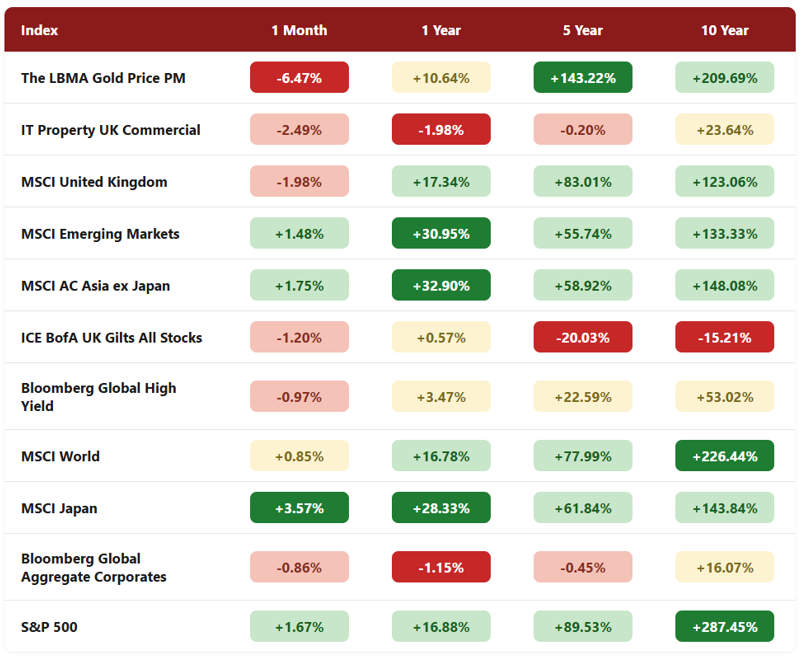
All performance figures are from FE analytics (as at 30/09/2026) and quoted on a total return basis in pounds sterling.
The Monthly Market Commentary (MMC) is written and researched by Scott Bradshaw, Lauren Hyslop and Jonathon Marchant for clients and professional connections of Mattioli Woods and is for information purposes only. It is not intended to be an invitation to buy, or to act upon the comments made, and all investment decisions should be taken with advice, given appropriate knowledge of the investor’s circumstances. The value of investments and the income from them can fall as well as rise and investors may not get back the full amount invested. Past performance is not a guide to the future.
Mattioli Woods Limited is authorised and regulated by the Financial Conduct Authority.
Sources: All other sources quoted if used directly, except fund managers who will be left anonymous; otherwise, this is the work of Mattioli Woods.
You may also like

Mattioli Woods renews Leicester Tigers partnership

Monthly Market Commentary – August 2026

Care costs dominate retirement concerns with most over-55s unprepared for Inheritance Tax hit
No results match your filters. Try a different tab or category.