
Businesses
Funding growth. Creating opportunities.
For many business owners, borrowing plays an important role in helping turn ambition into reality.

Commercial mortgages and business lending
Whether purchasing business premises, investing in growth, acquiring another business or refinancing existing arrangements, access to appropriate funding can create opportunities that may not otherwise be possible.
Commercial borrowing is about more than simply securing finance.
The structure of borrowing, repayment terms, ownership arrangements and wider financial implications can all have a significant impact on both the business and the business owner.
At Mattioli Woods, we help business owners understand how borrowing fits within their broader business and financial objectives and, where appropriate, connect them with specialist lending expertise.
The right lending solution should support more than today’s needs. It should support tomorrow’s ambitions.
Looking beyond the interest rate
When business owners consider borrowing, the conversation often begins with interest rates.
While pricing is important, it’s rarely the only consideration.
The structure of a facility, repayment flexibility, security requirements, lender appetite and long-term affordability can all influence whether a particular solution is appropriate.
Commercial borrowing decisions can affect everything from business cash flow and future investment plans to property ownership structures, succession planning, retirement objectives and long-term wealth creation.
That’s why commercial borrowing should be considered within the context of wider business and financial planning rather than as a standalone transaction.
The cheapest solution is not always the most appropriate one.
Commercial property finance
For many business owners, purchasing their own premises represents an important milestone.
Owning business premises can provide greater control, reduce reliance on landlords and create a valuable asset that forms part of a wider wealth strategy.
Commercial mortgages can support the acquisition, refinancing or development of business property across a wide range of sectors and circumstances.
For some business owners, property ownership may also play an important role in retirement, succession and long-term financial planning.
Business premises can become far more than a place of work. They can become part of a broader wealth creation strategy.

Commercial property and pension planning
One of the opportunities often overlooked by business owners is the relationship between commercial property ownership and pension planning.
Depending on individual circumstances, arrangements such as SIPP and SSAS may be able to acquire commercial property occupied by the business.
This can create opportunities to align business objectives, property ownership and retirement planning within a broader long-term strategy.
As with all planning, suitability will depend on individual circumstances, objectives and prevailing legislation.
The most effective planning often connects multiple aspects of a business owner’s financial life.

Supporting business growth
Access to finance can play an important role in supporting expansion plans.
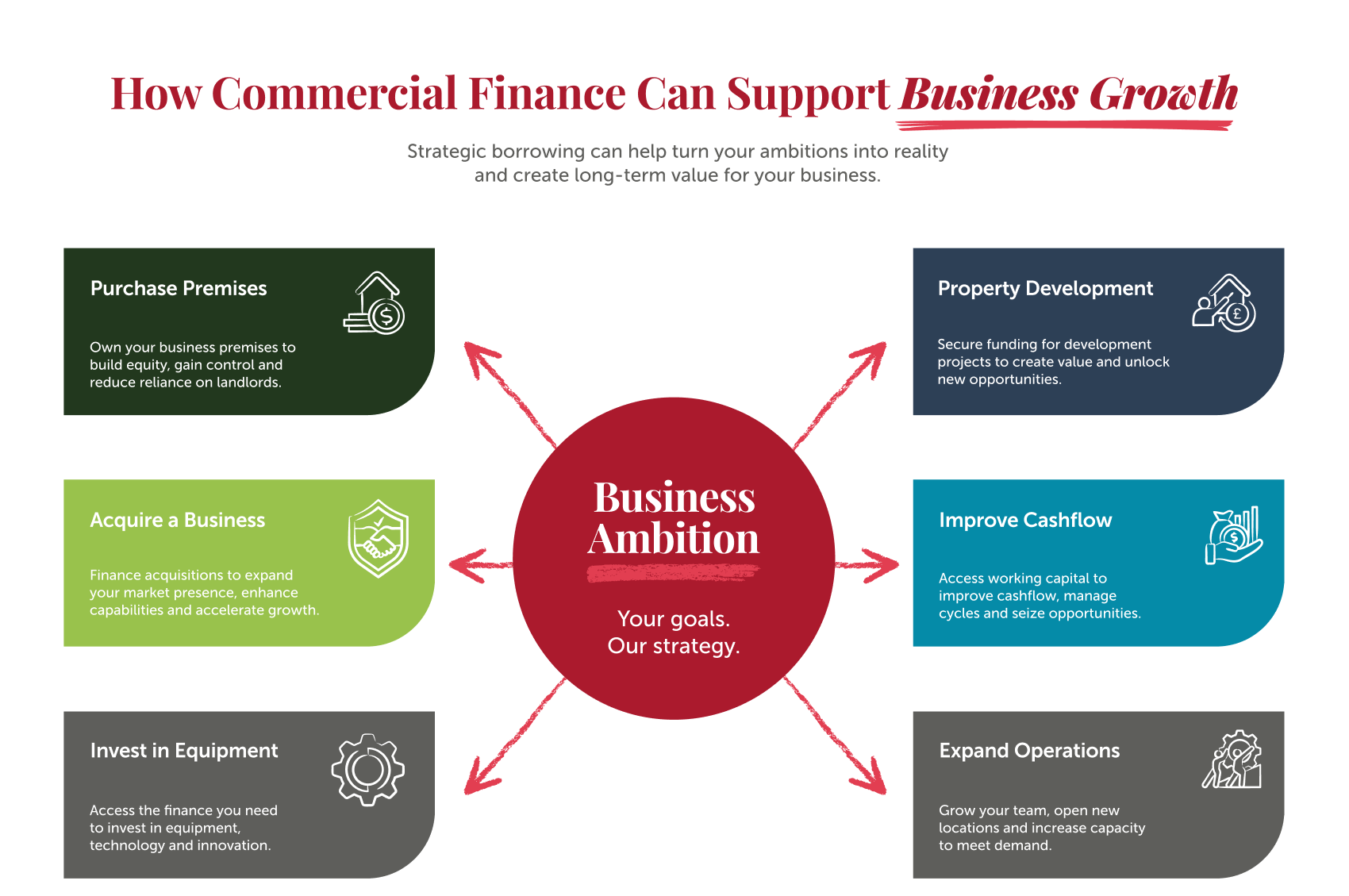
Whether funding acquisitions, investing in equipment, recruiting staff, developing property or improving operational capacity, borrowing can help businesses pursue opportunities while preserving working capital.
The challenge is ensuring borrowing remains aligned with both business objectives and long-term affordability.
Growth should strengthen a business rather than create unnecessary financial strain.
Refinancing and restructuring borrowing
Business circumstances rarely stand still.
Facilities that were appropriate several years ago may no longer reflect current objectives, borrowing requirements or market conditions.
Reviewing existing borrowing arrangements can help identify opportunities to improve flexibility, simplify structures or align lending with changing business priorities.
Sometimes the most valuable lending decision is not arranging new borrowing. It’s ensuring existing borrowing remains fit for purpose.
Access to specialist lending expertise
Commercial mortgages and business lending can be highly specialised.
Different lenders often have different approaches to sectors, property types, ownership structures and borrowing requirements. As a result, finding the most appropriate solution frequently requires specialist knowledge and market insight.
To ensure clients receive expert support, Mattioli Woods works alongside trusted commercial mortgage specialists at White Mortgages, who have significant experience across commercial finance and business lending solutions.
This collaborative approach helps ensure clients benefit from specialist lending expertise while keeping borrowing decisions aligned with their wider business and financial objectives.
Successful borrowing decisions are about more than securing finance. They’re about supporting a wider strategy.
The Mattioli Woods approach
For more than 35 years, Mattioli Woods has worked closely with business owners and owner-managed businesses.
We understand that borrowing decisions often sit alongside wider considerations such as cash-flow management, property ownership, pension planning, succession and long-term wealth creation.
Our role is to help business owners understand how commercial borrowing fits within their broader financial objectives and long-term plans.
Where specialist lending expertise is required, we work closely with trusted partners to help ensure clients receive expert support while maintaining a joined-up approach to their wider financial planning.
Borrowing decisions are often most effective when viewed as part of a broader financial strategy.
FAQs
Frequently asked questions
What is a commercial mortgage?
A commercial mortgage is a loan secured against commercial property, typically used to purchase, refinance or develop premises used for business purposes.
Unlike residential mortgages, commercial mortgages are assessed based on factors such as business performance, cash flow, property type and the purpose of the borrowing. They can be used by owner-occupiers, property investors and businesses seeking to acquire or refinance commercial property.
For many business owners, a commercial mortgage can provide a route to owning premises rather than leasing them, helping create long-term value alongside the operation of the business.
Can I buy my business premises through a pension?
In certain circumstances, SIPP and SSAS may be able to acquire commercial property occupied by a business.
This can create opportunities to align business ownership, property ownership and retirement planning within a single long-term strategy. The business typically pays rent to the pension arrangement, helping move value from the business into a tax-advantaged retirement structure.
While this can be an attractive option for some business owners, suitability will depend on individual circumstances, objectives and prevailing legislation.
Can my SIPP/SSAS borrow to facilitate a purchase?
In certain circumstances, SIPP and SSAS are also able to borrow funds to support the acquisition of commercial property. This can provide additional flexibility where the pension arrangement does not hold sufficient cashflow to complete a purchase outright, allowing borrowing to be combined with existing pension funds as part of a wider acquisition strategy. Any borrowing must remain within prescribed limits and meet applicable legislative requirements, and suitability will depend on individual circumstances and objectives.
How much can I borrow on a commercial mortgage?
The amount available will depend on factors such as business profitability, cash flow, security available, lender criteria and the purpose of the borrowing.
Lenders will typically assess both the affordability of repayments and the strength of the underlying business. The type of property being acquired and the deposit available may also influence borrowing capacity.
A specialist adviser can help assess the options available and identify the most appropriate lenders based on your circumstances.
Is it better to own or rent business premises?
There is no universal answer.
For some businesses, owning premises can provide greater control, protection from rising rents and the opportunity to build long-term value through property ownership. For others, leasing may offer greater flexibility, lower upfront costs and the ability to adapt more easily as the business evolves.
The most appropriate approach will depend on factors such as cash flow, growth plans, capital availability, tax considerations and long-term business objectives.
The key question is often not whether ownership is better than renting, but which option best supports the future of the business.
Can commercial borrowing support business growth?
Yes.
Many successful businesses use borrowing strategically to support acquisitions, expansion, equipment purchases, property investment, recruitment and wider growth initiatives.
Appropriate finance can help businesses pursue opportunities while preserving working capital and maintaining operational flexibility. The key consideration is ensuring any borrowing remains affordable and aligned with both current needs and long-term objectives.
When used effectively, borrowing can become a tool for growth rather than simply a source of debt.
Borrowing with purpose
Commercial borrowing can be a powerful tool when used strategically.
Whether the objective is purchasing premises, supporting growth, restructuring existing facilities or aligning property ownership with long-term financial planning, the right lending solution should support wider business objectives.
At Mattioli Woods, we help business owners consider borrowing as part of a broader financial strategy built around clarity, expertise and long-term thinking.
The most effective borrowing decisions are not measured by the amount borrowed. They’re measured by the opportunities they help create.