
Businesses
Exit & Succession Planning
Building a successful exit starts years before you leave.

Exit and Succession Planning
Most business owners spend years building their business. They invest time, energy and capital into creating something valuable. They navigate challenges, create opportunities and often make significant personal sacrifices along the way. Yet one of the most important business decisions they will ever make is often left until much later.
How and when will they eventually step away?
Whether the future involves selling the business, passing it to family members, completing a management buyout or gradually reducing involvement over time, the decisions made long before an exit can have a significant impact on both business value and personal financial outcomes.
At Mattioli Woods, we help business owners prepare for life beyond business ownership through joined-up financial planning, succession planning and exit strategy advice.
Because the most successful exits are rarely improvised. They are planned.
The question every business owner eventually faces
For many business owners, the business becomes far more than a source of income.
It represents years of hard work, personal sacrifice and commitment. It becomes intertwined with their identity, their ambitions and often their sense of purpose.
That is why exit planning is rarely just a financial exercise. It often prompts some of the most important questions a business owner will ever face. What is the business truly worth? How much wealth is enough to achieve financial independence? What happens after the sale? Who will take over? And what role, if any, will the business continue to play in life going forward?
These questions can feel distant when the focus is on growth and day-to-day demands. Yet the earlier they are considered, the more options and flexibility business owners typically have available to them.
Because planning for an exit is not simply about leaving a business. It is about defining what comes next.
Understanding what financial independence looks like
Many business owners assume that selling the business will automatically provide financial security. The reality is often more complex.
Before deciding how to exit, it is important to understand what the exit actually needs to achieve.
What level of wealth would provide genuine financial independence? How much income will be required to support the lifestyle you want in retirement? What role will future spending, gifting and family objectives play? And how much flexibility will you want as circumstances change over time?
These questions help establish what success actually looks like.
Using cashflow modelling and structured financial planning, we help business owners understand how much capital may be required to achieve their goals and how the future value of the business fits within those wider objectives.
Because a successful exit is not defined by what the business is worth. It is defined by what that value enables you to do next.

Understanding what financial independence looks like helps establish the destination.
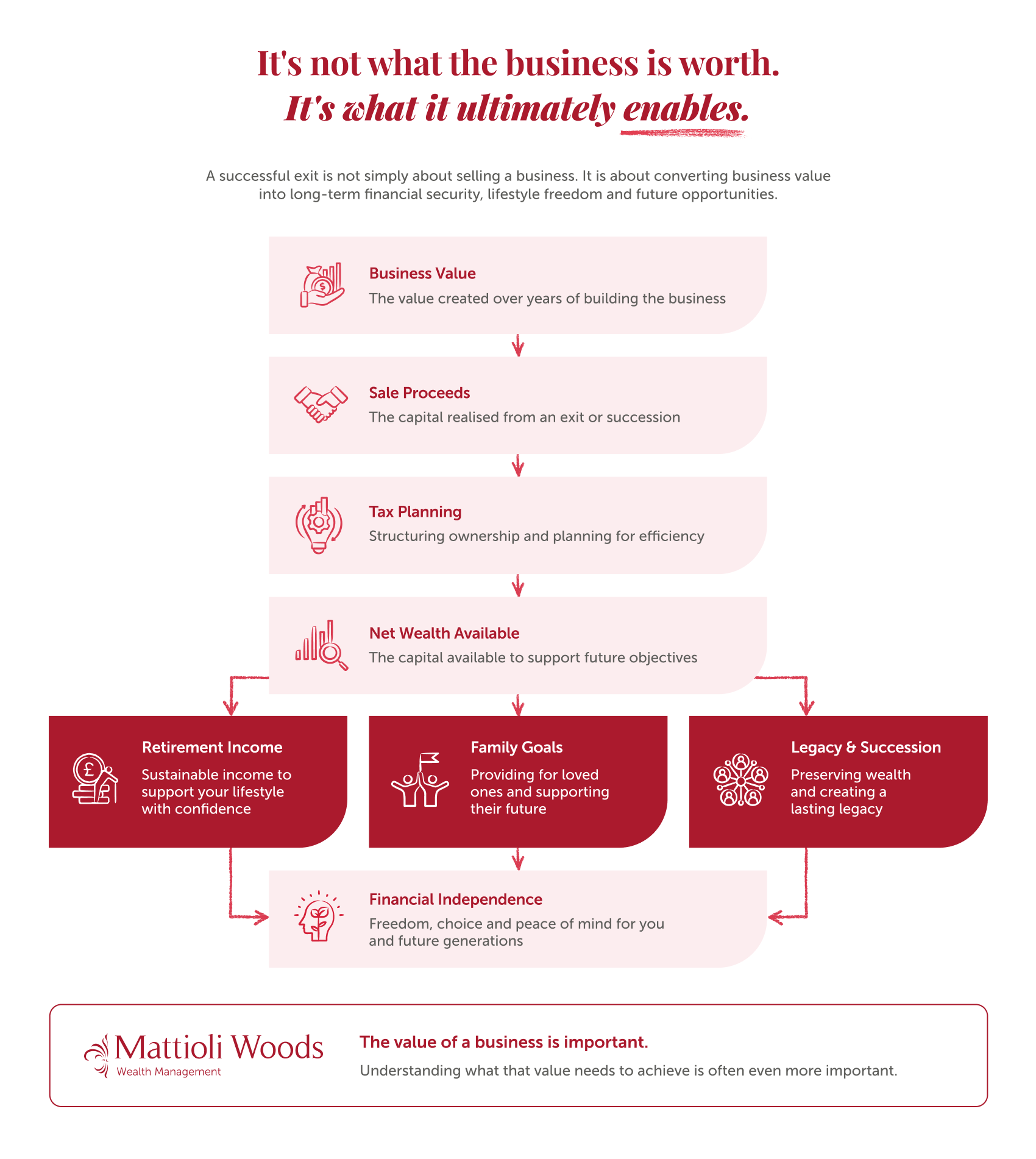
The next question is how to maximise the value of the business itself and create the widest possible range of options when the time comes to exit.
Maximising business value
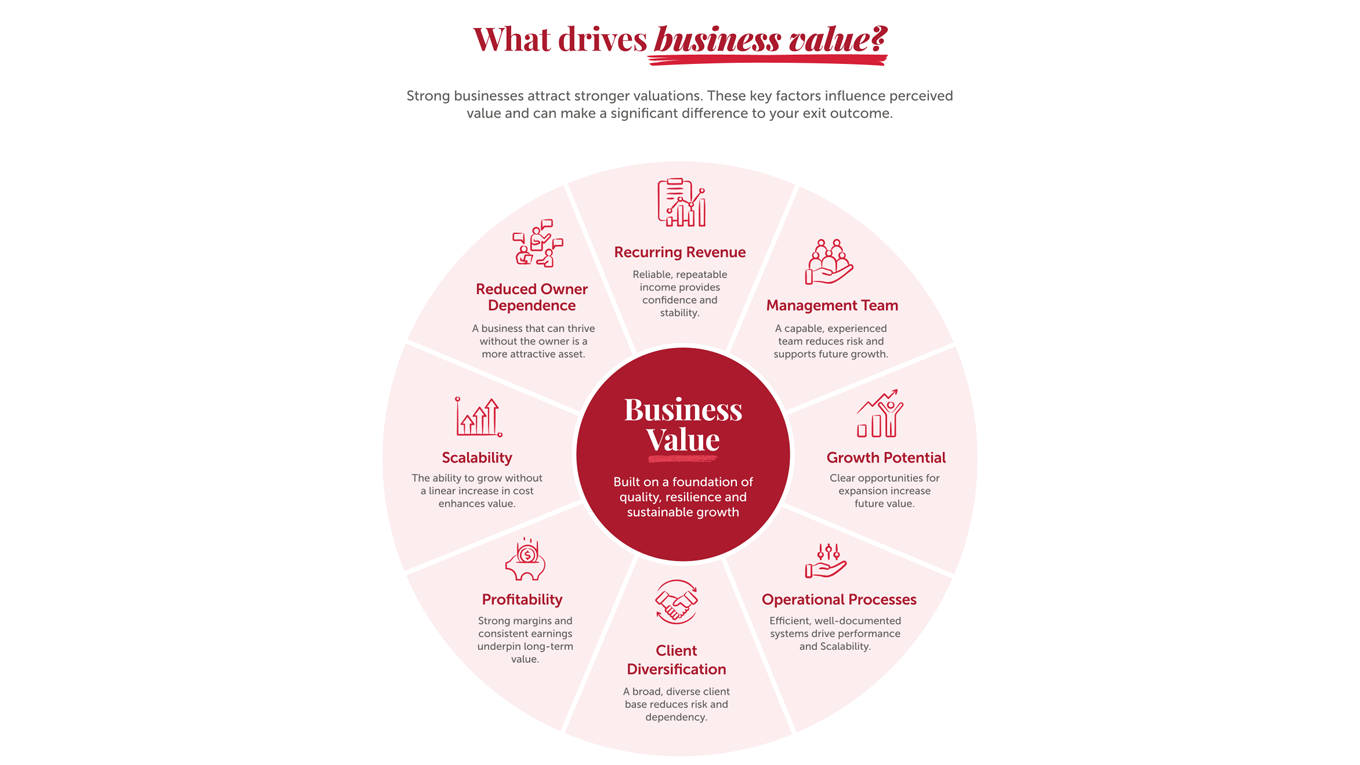
The value of a business is rarely determined solely by financial performance.
Potential buyers may also consider factors such as recurring revenues, management structure, client concentration, operational processes, growth prospects and the extent to which the business relies on the owner.
Understanding these factors early can help identify opportunities to strengthen business value and improve attractiveness to future buyers or successors.
Increasing value is not always about growing turnover or profitability. In many cases, it is about building a business that is more resilient, less dependent on the owner and easier for somebody else to acquire, operate and grow.
Because the most valuable businesses are often those that can thrive without their founder.
Choosing the right succession strategy
There is no single route to a successful exit. The most appropriate approach will depend on personal objectives, family circumstances, business structure and future ambitions.
Possible routes may include:
Trade Sale
Selling the business to an external buyer seeking growth, scale or strategic opportunities.
Management Buyout
Transitioning ownership to an existing management team who understand the business and its culture.
Family Succession
Passing ownership and responsibility to the next generation whilst preserving family involvement and business continuity.
Gradual Exit
Reducing involvement over time whilst retaining an ongoing interest in the business.
Each approach brings different opportunities, risks and planning considerations. The right solution is often determined by the future you want as much as the business you have built.
Preparing personally for life after the business
One of the most overlooked aspects of exit planning is personal preparation.
Business owners often spend years planning how they will leave the business but very little time considering what they are moving towards.
For some, retirement may provide new opportunities, greater flexibility and more time with family. For others, stepping away from a business that has shaped much of their life can be a significant transition. Good exit planning considers both the financial and personal aspects of life after business ownership.
Because a successful exit is not simply about selling a business. It is about creating a future you are excited to move into.

Managing the proceeds of an exit
A business sale can transform an illiquid business asset into personal wealth almost overnight. For many business owners, this represents one of the most significant financial transitions of their lives. The focus often shifts from creating wealth to managing it.
How should proceeds be invested? How can wealth be structured tax-efficiently? What role should pensions, trusts and other planning arrangements play? How much can be spent with confidence whilst preserving long-term financial security? And how should wealth be passed on to future generations?
These questions are often just as important as the sale itself.
At Mattioli Woods, we help business owners navigate this transition through joined-up financial planning, investment management and wealth structuring, helping ensure the value created through years of hard work continues to support future goals and ambitions.
Because creating wealth and managing wealth require different skills.
The role of tax planning
Tax considerations can have a significant influence on the net value ultimately retained following a business sale or succession event.
Early planning may help identify opportunities to structure ownership, remuneration and succession arrangements more efficiently whilst supporting wider personal objectives.
The most effective tax planning is rarely undertaken shortly before an exit. It is often the result of decisions made years in advance. Because timing can be just as important as strategy.
The Mattioli Woods approach
For more than 35 years, Mattioli Woods has worked closely with business owners navigating complex financial decisions.
In fact, the business was originally built helping owner-managed businesses address many of the challenges associated with wealth creation, pensions, succession and long-term financial planning. That heritage remains an important part of who we are today.
Today, our advisers help business owners connect business success with personal financial goals through expert financial planning, retirement planning, pension planning and investment advice.
Business owners often rely on a wider network of professional advisers. Where specialist legal or accountancy advice is required, we work closely alongside those professionals to help ensure financial planning, tax considerations, business objectives and succession plans remain aligned.
This joined-up approach helps create better-informed decisions, clearer strategies and more effective outcomes.
Our approach combines cashflow modelling, retirement planning, succession planning and wealth management within one integrated framework, helping business owners understand not only how to build value, but how to ultimately convert that value into long-term financial security.
Because a successful exit is about more than completing a transaction.
It is about creating the freedom, confidence and choices that come next.
FAQs
Frequently asked questions
When should I start planning my exit?
Ideally, exit planning should begin several years before any anticipated sale, succession event or reduction in involvement.
Many of the factors that influence business value, tax efficiency and succession options take time to implement. Starting early often creates greater flexibility, more strategic choices and better outcomes for both the business and the owner.
The most successful exits are rarely planned in the final year before a transaction. They are often the result of decisions made well in advance.
How much does my business need to be worth for me to retire?
This depends entirely on your personal circumstances, lifestyle objectives, other assets and future income requirements.
The more important question is often not what the business is worth, but what you need it to achieve.
Using cashflow modelling and financial planning, we help business owners understand how much capital may be required to support their desired lifestyle and whether the anticipated value of the business is likely to be sufficient to meet those goals.
What is the difference between succession planning and exit planning?
Succession planning focuses primarily on what happens to the business itself, including who will take over ownership, leadership and day-to-day responsibility.
Exit planning is broader.
It considers the future of both the business and the owner, incorporating retirement planning, personal financial objectives, tax considerations, wealth structuring and life after business ownership.
In simple terms, succession planning focuses on the future of the business. Exit planning focuses on the future of the business owner as well.
How can I reduce tax on a business sale?
Tax considerations can have a significant impact on the amount ultimately retained following a sale.
The options available will depend on factors such as business structure, ownership arrangements, personal circumstances and prevailing legislation. In many cases, the most effective tax planning opportunities arise from decisions made years before an eventual transaction takes place.
That is why early planning is often one of the most important factors in improving outcomes and helping ensure more of the value created within the business remains available to support future objectives.
What should I do with the proceeds of a business sale?
A business sale can create a significant financial transition, transforming an illiquid business asset into personal wealth.
The focus often shifts from creating wealth to managing it.
Considerations may include how proceeds should be invested, how much income can be taken sustainably, how wealth should be structured for future generations and how tax can be managed efficiently.
Financial planning can help provide clarity and confidence around these decisions, ensuring the proceeds from a sale are aligned with your long-term objectives and the future you want to create.